
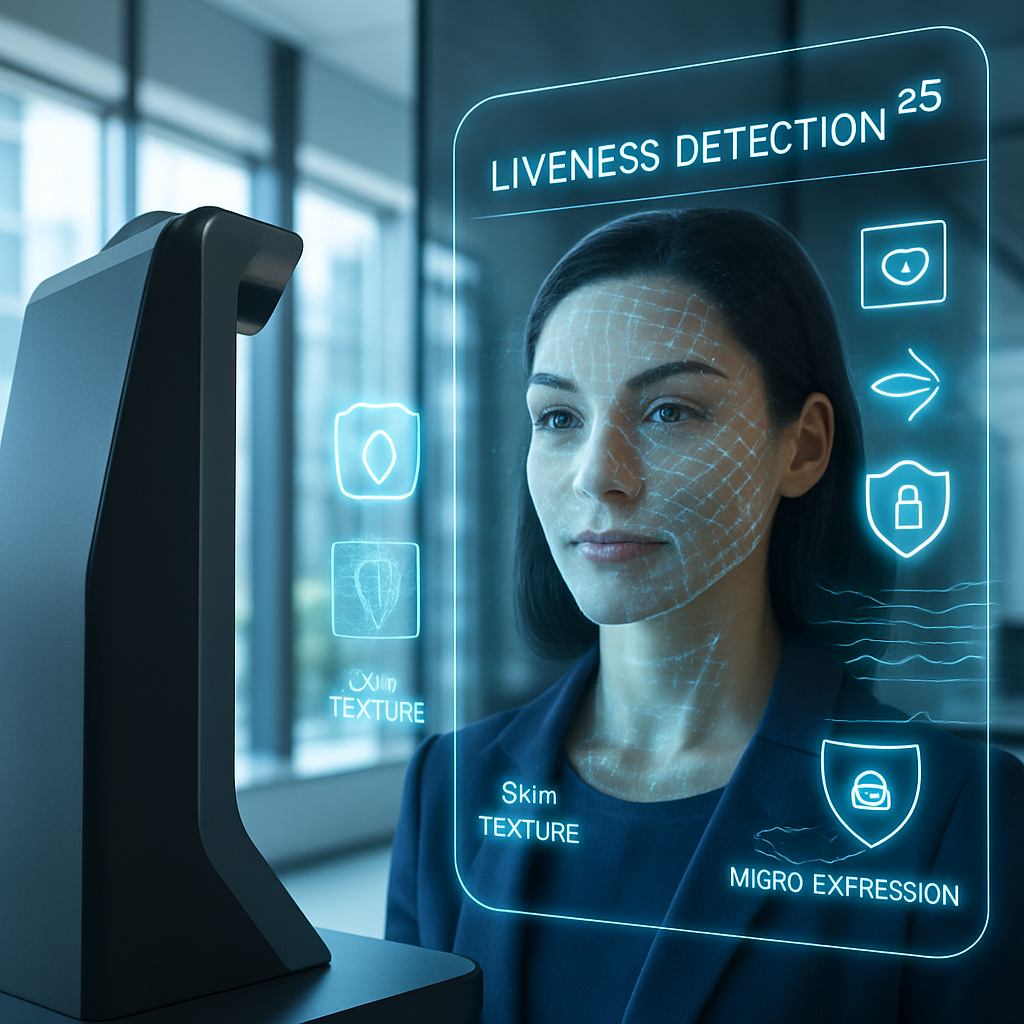
Understanding how liveness detection enhances biometric verification is crucial for navigating identity checks securely and efficiently in 2025. These technologies improve accuracy by distinguishing genuine user presence through active, passive, and hybrid methods, reducing errors commonly faced in face recognition processes. Incorporating professional KYC tips such as optimal lighting and positioning makes biometric interactions faster and more reliable.
This guide explains the underlying liveness detection techniques, explores common causes of biometric verification failures, and offers actionable advice to strengthen your approach. You’ll also learn how modern systems defend against sophisticated threats like injection attacks and deepfake fraud, ensuring greater identity verification security. Let’s explore how mastering these elements can help you confidently manage biometric checks with clearer understanding and improved results.
Understanding liveness detection and biometric verification is essential for anyone navigating identity checks in 2025, especially within KYC processes. This guide clarifies how these technologies function, common challenges users face, and actionable advice to improve your verification success.
- Grasp core liveness detection methods: Learn the distinctions between active, passive, and hybrid approaches that verify genuine user presence.
- Acknowledge sophisticated spoofing threats: Recognize that advanced spoofing includes injection attacks feeding fake biometric data directly, not just camera-based spoofing.
- Identify common verification failure causes: Understand why biometric checks fail despite user authenticity and how to adjust to reduce errors.
- Implement professional KYC biometric tips: Follow best practices such as proper lighting, stable positioning, and prompt responsiveness during face recognition checks.
- Stay informed about fraud prevention: Know how liveness detection counters deepfake and synthetic identity threats to enhance overall identity verification security.
- Hidden insight—address injection vulnerabilities: User education on avoiding data manipulation attempts helps close gaps that liveness detection alone cannot cover.
- Leverage knowledge for specialized cases: Apply tailored strategies for specific contexts like crypto app verifications to improve passing rates.
Next, this guide will detail each liveness detection method and practical user steps, empowering you to confidently complete biometric verification processes. These resources are provided for educational purposes and professional awareness, not for bypassing official security protocols.
Understanding Liveness Detection in Biometric Verification
What Is Liveness Detection and Its Role in Identity Checks
Liveness detection is a critical security feature embedded in biometric verification systems designed to distinguish between genuine, live biometric traits and artificial or spoofed biometric data. Its primary role is to prevent unauthorized access from fraudsters using stolen photos, videos, masks, or digital recreations. By confirming that the biometric input originates from a live user physically present during the verification process, liveness detection enhances the integrity and trustworthiness of identity checks.
In modern identity verification workflows, particularly those aligned with Know Your Customer (KYC) regulations, liveness detection acts as a frontline defense, ensuring that biometric data cannot be easily replicated or injected through non-human means. This layer mitigates risks inherent in purely biometric-based authentication methods by verifying user presence and “aliveness” in real time.
Types of Liveness Detection Methods: Active, Passive, and Hybrid
- Active Detection: Involves direct user interaction, such as following on-screen prompts to blink, smile, or turn the head. These challenges complicate spoofing attempts by requiring dynamic responses that are difficult to reproduce with static images or replayed video.
- Passive Detection: Relies on subtle, unprompted analysis of facial cues—like texture, reflections, or micro-expressions—without interrupting the user. This method offers seamless verification with a lower burden on the user but requires sophisticated algorithms to detect spoofing.
- Hybrid Approaches: Combine active engagement and passive monitoring to improve detection accuracy. For instance, a system may ask the user to blink (active) while simultaneously analyzing skin texture and lighting inconsistencies (passive) to confirm liveness.
Understanding these methods helps users anticipate verification requirements and prepares them for smoother biometric checks. Mastery of these fundamentals naturally leads to anticipating common causes behind biometric verification failures.
Common Reasons Why Biometric Verification Fails and How to Avoid Them
Poor Lighting and Unstable Positioning
Successful biometric verification hinges on clear, high-quality facial image capture. Lighting that is too dim, too bright, or uneven creates shadows or glare that obscure facial features. Similarly, a wobbling camera or off-angle positioning can distort the image, reducing algorithm accuracy.
To avoid these pitfalls:
- Use natural daylight where possible or balanced artificial lighting to prevent overexposure or shadows.
- Maintain a stable device or tripod to keep the camera steady and aligned directly facing your face, ensuring full visibility.
- Position yourself in front of a neutral background to help the system focus without distractions.
By optimizing these environmental factors, users improve the quality of captured inputs, directly increasing verification success rates. This leads to the next challenge of responding accurately during active detection prompts.
Delayed or Incorrect User Responses During Active Checks
Active liveness detection requires timely and precise user actions—blinking, nodding, or head turns—within strict timeframes. Hesitation, guessing, or incorrect motions often trigger verification failures.
To maximize success:
- Listen carefully to instructions and complete actions promptly as they appear on screen.
- Practice common prompts where possible to build confidence and reduce hesitation.
- Stay calm and maintain focus to avoid errors caused by anxiety or distraction.
Mastering this interaction improves system responsiveness and decreases failed attempts. However, some users believe face recognition systems can be easily tricked, which is a misconception worth clarifying.
Face Recognition Bypass Myths and Real-World Challenges
Popular myths suggest that showing a photo, video, or mask can fool biometric systems. While rudimentary attacks once had some success, modern liveness detection algorithms have robust countermeasures. Nevertheless, failures still occur due to factors like poor image quality, inconsistent facial expressions, or system glitches—not simple spoofing attempts.
Understanding that biometric verification failures more often arise from technical or environmental issues rather than successful fraud attempts helps users focus on genuine solutions: improving capture conditions and responding properly during checks.
Addressing environmental and behavioral factors effectively opens the door to recognizing more sophisticated threats that target biometric verification systems beyond camera-based tricks.
Advanced Spoofing Threats to Biometric Systems
Overview of Spoofing Attacks Beyond Camera-Based Tricks
While liveness detection effectively counters traditional presentation attacks (photos, masks), threat actors now exploit advanced methods, notably injection attacks. These involve feeding manipulated or fake biometric data directly into backend verification systems, bypassing the camera interface entirely.
Injection attacks can use malware or compromised APIs to submit synthetic or stolen biometric templates, rendering facial capture and liveness processes ineffective. This vulnerability highlights the importance of secure biometric data pipelines and system integrity checks beyond user-facing interaction.
How Deepfake Fraud and Synthetic Identities Challenge Verification Security
Deepfake technologies create highly realistic but synthetic facial videos or images that can mimic live behavior, complicating detection efforts. When combined with stolen personal data, they facilitate synthetic identities that appear authentic to automated systems.
These emerging threats push liveness detection vendors to develop more sophisticated algorithms capable of pinpointing subtle anomalies in texture, motion, or physiological signals. For users, awareness of these risks reinforces the value of following strict verification protocols and using trusted platforms.
Equipped with this knowledge, users can now apply actionable strategies to meet biometric liveness requirements efficiently.
Professional Tips for Successfully Passing Biometric Liveness Checks
Optimizing Lighting and Camera Position for Clear Face Recognition
- Use natural sunlight or diffuse artificial light sources to evenly illuminate your face without harsh shadows or glare.
- Keep the device steady on a flat surface or tripod; avoid handheld movements which blur images.
- Face the camera directly at eye level to ensure symmetrical and unobstructed facial views.
- Remove glasses, hats, or face coverings that may interfere with facial feature detection unless explicitly allowed.
Responding Promptly and Accurately to Active Liveness Prompts
When prompted to perform specific actions (blink, smile, turn head), follow instructions immediately and precisely. These movements confirm user presence and frustrate spoofing attempts.
Practice typical prompts in advance if your platform allows test runs. Stay relaxed to reduce over-exaggeration which can confuse detection algorithms.
Ensuring Device and Network Reliability During Verification
Biometric systems rely on uninterrupted data transmission. Use a reliable internet connection and compatible device hardware with an updated operating system and camera drivers. Avoid switching networks or multitasking during the verification process to prevent interruptions or delays that may cause errors.
Explore detailed KYC verification tips in our Online Identity Verification Guide for further professional insights.
Implementing these tips addresses common user-level obstacles and prepares you to counter sophisticated manipulations by understanding technical vulnerabilities next.
Conclusion
Mastering biometric liveness detection requires a clear understanding of its core methods—active, passive, and hybrid—and the environmental and behavioral factors influencing verification success. Optimal lighting, stable device positioning, prompt and accurate user responses, and reliable network conditions collectively enhance the quality of biometric input and reduce false rejections. Awareness of advanced spoofing challenges such as injection attacks and deepfake fraud underlines the ongoing need for robust system protections beyond user interaction.
These insights matter because streamlined biometric checks not only save time but also ensure consistency and clean data capture, supported by locale-appropriate formatting and reusable verification components. Such precision ultimately contributes to smoother authentication experiences and heightened security confidence when using editable document templates and related digital workflows.
Looking forward, users and developers alike should focus on combining practical preparation with continuous innovation in detection algorithms to maintain efficiency and resilience. Embracing this holistic approach will better equip everyone to navigate increasingly sophisticated identity verification landscapes with clarity and control.