


The Importance of Visual Accuracy in Certificate Design
Producing a precise visual representation of a certificate such as one from Limkokwing University requires more than basic layout replication. The specific fonts, spacing, paper texture, and layered security marks all contribute to its distinctive look. Achieving exactness is challenging because small differences in typography or element alignment can be noticeable, especially under close inspection or high-resolution photography. For professionals needing realistic certificate visuals, understanding these subtleties and replicating them faithfully is critical for their projects, whether for educational simulations, film props, or graphic presentations.
Solving the Design Challenge with Our Template
Our template addresses the common problem of digital certificates appearing obviously artificial by focusing on meticulous detail. Each element, including logos, fonts, and spacing, matches the style specifications of Limkokwing University’s original certificates. This avoids common pitfalls such as pixelated edges, incorrect font weights, or misaligned text blocks that degrade the visual impact. The design is layered and organized to streamline editing without sacrificing the fidelity of the original aesthetic. For further insights into document design standards and quality, read our technical guide on Document Quality, which complements the accuracy and practical use of templates like this.
Technical Visual Specifications
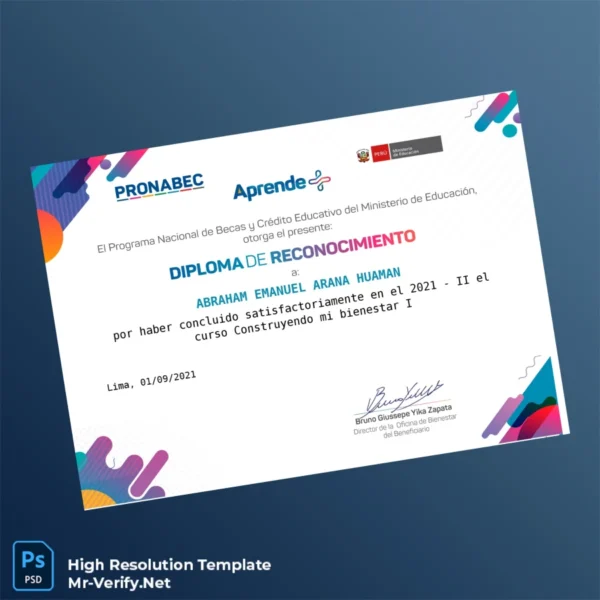
One of the key strengths of this template is its precision in scale and typography to provide a 1:1 ratio replica of certificate dimensions. The fonts have been carefully identified and matched to maintain the exact line spacing and kerning found on original certificates. Additionally, the template incorporates subtle texture overlays replicating the paper grain and finish typical of Limkokwing University’s certificates. These textures contribute to depth and realism, preventing the flat, ‘digital’ look common in lesser designs. The template is delivered as a layered PSD file, enabling maximum control over individual components such as signatures or seals. This format also supports high-resolution output, suitable for professional print or digital display. To explore complementary professional-grade editable certificate options, consider the Peru Pronabec Certificate of Recognition template.
Customization and Editing Workflow
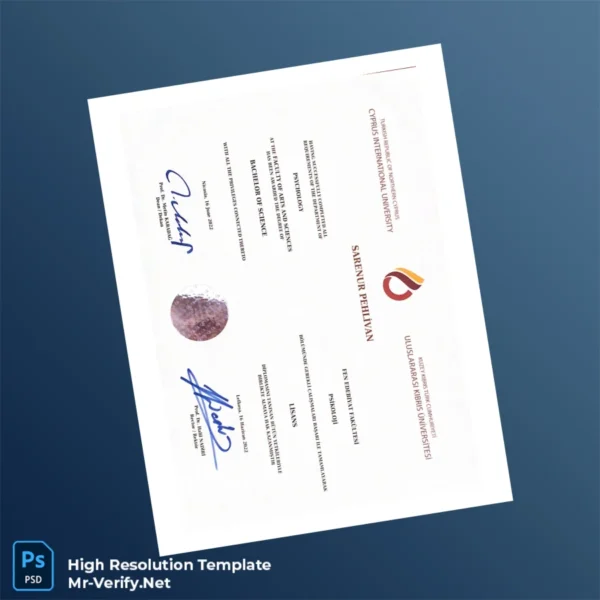
Editing the template is straightforward for users familiar with Adobe Photoshop or compatible editing software. The file leverages smart objects, allowing you to replace text fields such as recipient name, degree, and dates without altering the layout’s integrity. Layer groups are clearly labeled for easy navigation, and any included decorative elements are adjustable independently. This workflow ensures you can personalize the certificate while retaining all design proportions and elements. The PSD file is optimized for performance, preventing slowdowns when working with high-resolution assets. For expanding your editable certificate toolkit, you may find the Northern Cyprus International University Bachelor of Science template a valuable addition.
Production and Printing Advice
For physical outputs, selecting a matte or lightly textured cardstock similar to the original certificate paper will enhance authenticity. Using print settings with a minimum of 300 DPI guarantees sharp text and images, while adjusting color profiles to match standard CMYK printers helps maintain color accuracy. Avoiding glossy finishes reduces glare when photographing or scanning the certificate, preserving its intended visual texture in reproductions. Proper printer calibration is also recommended to prevent color shifts. For best results producing professional-level certificate prints, the Colombia Servicio Nacional de Aprendizaje SENA diploma template offers complementary guidance and tools.


Reviews
There are no reviews yet.